30-60-90 Day Onboarding Framework
A practical framework to help education and public sector employers structure the first three months of a new starter's journey - from day-one expectations through to a genuine sense of belonging by day 90.
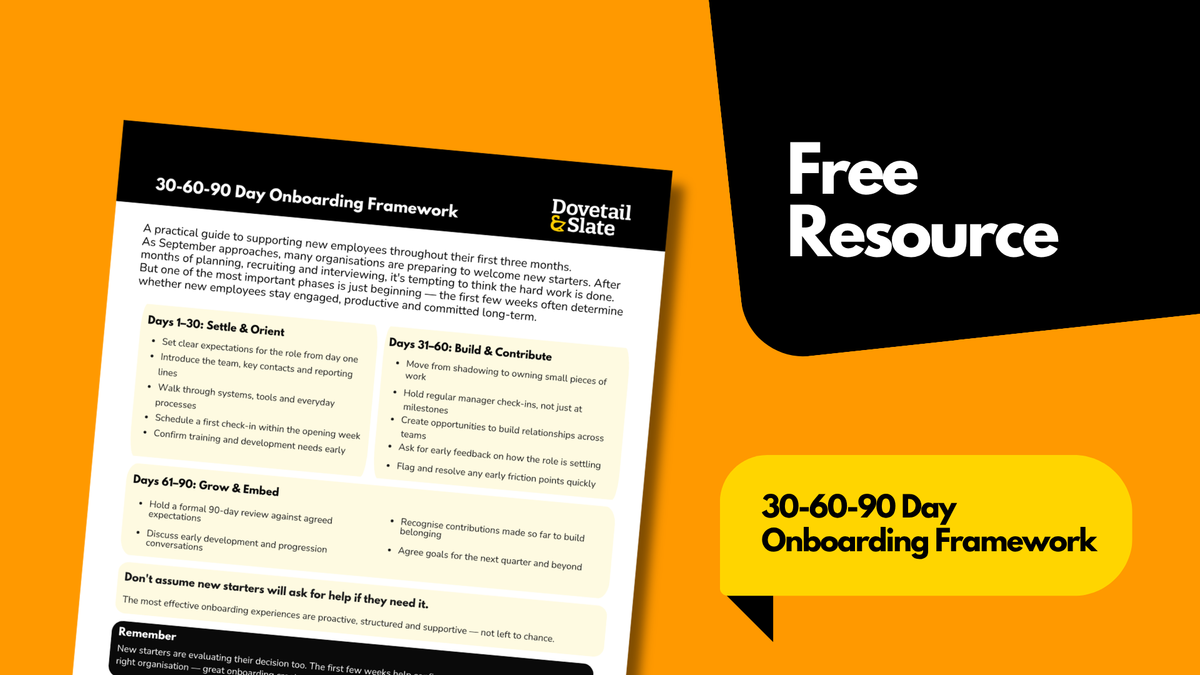
A practical guide to supporting new employees through their first three months
Recruiting the right person is only half the job. After months of planning, interviewing and hiring, it's tempting to think the hard work is done — but the first 90 days are what often decide whether a new starter stays engaged, productive and committed for the long term.
New starters are evaluating their decision too. How their first few months feel will help confirm whether they've joined the right organisation.
Days 1–30: Setting Foundations
- Clear expectations from day one — Set out the role, priorities and what success looks like before they even start.
- A structured induction — Give new starters a plan for their first week, not just a policy pack.
- Introductions that matter — Connect them with their team, wider colleagues and organisational culture early.
- A first check-in with their manager — Don't wait for problems to surface; ask how the first week has felt.
Days 31–60: Building Momentum
- Regular manager check-ins — Make feedback and recognition a routine, not a one-off.
- Early development conversations — Start talking about growth and progression before it's expected of them.
- Opportunities to build relationships — Encourage connections beyond their immediate team.
- Feedback that goes both ways — Ask what's working and what isn't, and act on it.
Days 61–90: Embedding & Belonging
- A genuine sense of belonging — By now, new starters should feel part of the organisation, not new to it.
- Longer-term goals in place — Development conversations shift from settling in to growing forward.
- A formal 90-day review — Reflect together on progress, challenges and what support is still needed.
- Confidence confirmed both ways — The first 90 days help confirm they've joined the right organisation.
A Note on Assumptions
Don't assume new starters will ask for help if they need it. The most effective onboarding experiences are proactive, structured and supportive — built around regular, genuine check-ins rather than an open door that's easy to avoid using.
Related Resources
Employer Brand Showcasing Impact Guide
A practical guide to helping you communicate purpose, culture and impact in a way that resonates with candidates.
Candidate Experience Interview Checklist
This checklist is designed for hiring managers in Education and the Public Sector who recognise that the interview is a high-stakes "first date." In a competitive talent market, the experience you provide is often the deciding factor for a top-tier candidate. Use this resource to audit your process and ensure every candidate leaves feeling valued, informed, and excited about the prospect of joining your team.
CANDIDATE PRIORITIES PULSE CHECK
Education professionals are making considered career decisions based on more than salary alone. After several disrupted academic years, candidates are clearer on their priorities, more confident asking questions and more selective about where they choose to work. This resource outlines practical actions colleges can take to attract and retain the right people.